
LOUIS LEFEBVRE
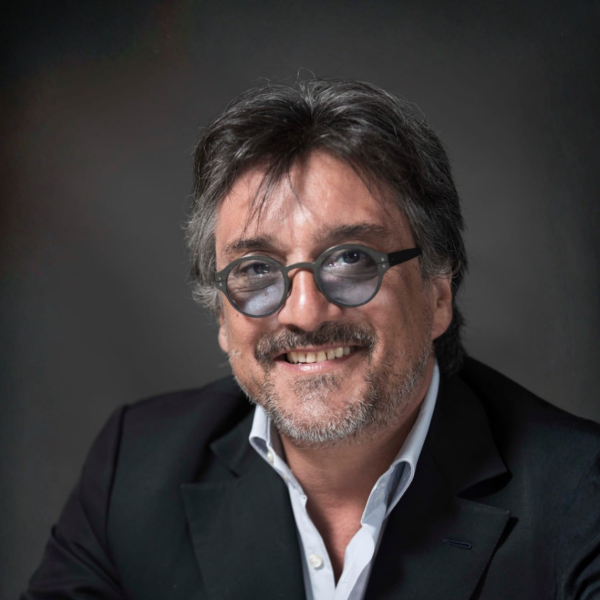
DIRECTOR OF LEFEBVRE & FILS GALLERY - PARIS
« Ceramics has recovered its freedom of expression »


DIRECTOR OF LEFEBVRE & FILS GALLERY - PARIS
« Ceramics has recovered its freedom of expression »
Founded in 1880, Lefebvre & Fils Gallery celebrates its 145th anniversary this year. Six generations have succeeded one another at the helm of this historic house, a master in the art of combining heritage and contemporaneity. Under the leadership of Louis Lefebvre, the gallery has established itself as a pioneering venue for contemporary ceramics, supporting artists and creators through a unique residency in Versailles.
François Blanc : Contemporary ceramics is experiencing unprecedented global growth today, what perspective do you take on this evolution, and which major trends or figures seem to you to mark the renewal of this medium?
Louis Lefebvre: Yes, it is undeniable growth. Ceramics is everywhere today: in major art fairs, galleries, biennales, museums. What was still considered marginal or "decorative" just twenty years ago is now at the heart of artistic discourse. But beyond fashion, there is something deeper.
This medium has become a genuine language of expression for an entire generation of artists from cultures, genders, and communities that had little visibility in the traditional spheres of art. Ceramics allows them to speak of their history, their memory, their roots. It is an art that stems from the body, from gesture, from contact with the earth, and therefore from something viscerally human.
We also observe a return to history, to origins: many artists draw from the traditions of their country, revisit ancestral forms, rituals, mythologies. This narrative and identity dimension is very strong.
And unlike other mediums, ceramics allows us to address these subjects without posture, with disarming sincerity. It is an art that remains at human scale, that speaks directly to the senses and to memory. Perhaps that is why it resonates so much today.
Lefebvre & Fils Gallery celebrates 145 years of existence this year. How can a gallery with such a heritage remain in step with its time, particularly through the lens of contemporary ceramics?
It is not so simple to remain connected to one's time when carrying such a long heritage. My initial training is rooted in the history of European ceramics from the 16th to the 18th centuries—a field I continue to love deeply. But in 2009, when my parents retired, I made a clear choice: to move toward the contemporary.
What interests me above all is dialogue with artists—understanding their ideas, their states of mind, accompanying them in creation. And then, as a frequent buyer at art fairs, I saw how absent contemporary ceramics was from the major international stages.
It was obvious: we needed to reintroduce this medium, not as a craft, but as a living field of creation. Today, my son Lucas, the sixth generation, continues this same dynamic. We continue to weave a dialogue between the old and the contemporary: we can perfectly well show a 17th-century vase alongside a sculptural work created yesterday. It is this dialogue that distinguishes us.
What explains, in your view, this renewed enthusiasm among collectors for a medium long considered as artisanal rather than artistic?
Ceramics has always had its letters of nobility. Simply, it has long been placed on the side of the decorative arts. Now, what we have been experiencing for about fifteen years is a shift: ceramics has once again become a sculptural medium of expression in its own right.
Artists find in it a freedom, an immediacy of gesture, a physicality that other mediums no longer offer. And collectors, for their part, are rediscovering a sensual and narrative dimension: the material, the firing, the trace of fire. These are works that breathe, that bear the hand of the one who made them.
The residency you created in Versailles is a unique tool in the landscape of galleries. How is this place of production and research a natural extension of a gallery's role today?
To my mind, it is self-evident. What is abnormal is that few galleries do it! If we reread the history of art, we see that in the 19th and early 20th centuries, collectors and gallerists concretely supported creation: they invited artists, financed their materials, hosted them in residence.
We do exactly that in Versailles. The gallery does not merely exhibit, it produces. It is a place of exchange, research, and experimentation, where the relationship between human and creator remains central. This accompaniment, both material and intellectual, is for us the key to strong and lasting works.
With us, everything stems from passion and emotion. We do not choose an artist based on their resume, but on what they provoke in us. What fascinates me is to propose challenges: inviting a metal sculptor or a painter to explore ceramics, leading them to confront a living, temperamental material.
We recently proposed this type of collaboration to two New York artists—one works with tires, the other with relief canvas. Having them create in ceramics is opening a new field of expression. This dialogue between techniques, cultures, and materials is at the heart of our commitment. But everything rests on a foundation: knowledge of art history. Without it, creation remains without roots.
What means do you employ to make ceramics accessible and desirable to new generations of audiences and collectors?
Our objective is clear: to make ceramics visible, comprehensible, accessible. This involves exhibitions, meetings, constant exchanges with museums and foundations. We work toward ceramics being perceived not as a niche art, but as a dialogue art, capable of touching all audiences.
What makes the difference is human contact. We encourage artists to meet the public, as Théo Ouaki did at the last Ceramic Art Fair in Paris, present at the stand every day. This proximity changes everything: collectors understand, visitors discover, institutions take interest.
Our strength is also diversity: diversity of generations, cultures, sensibilities. We love to cross perspectives. And with my son Lucas, we try to bring new energy, more transversal, which opens the gallery to other scenes.
After 145 years of history, how do you envision the evolution of Lefebvre & Fils Gallery in the years to come?
We always have several years of advance on our projects. We are currently working on a collaboration between fashion and ceramics, notably with Laurent Nicolas, who worked for twenty years at Marc Jacobs and Vuitton.
The idea is to cross disciplines, to experiment as Picasso, Miró, or Ettore Sottsass did before us with Sèvres porcelain. Combining noble materials with poor materials, playing on contrasts: this is a French tradition of experimentation.
In three or four years, a major project will see the light of day with a fashion house. It will be, I believe, a fine way to show that ceramics, after 145 years of history in our gallery, remains a medium of the future.

Groupon propose aux musées d'avoir recours au Yield management
Groupon.fr est un site de e-commerce basé sur le concept d'achat groupé. En d'autres termes, des personnes font groupe pour obtenir une remise substantielle sur un produit. Faire appel à ce site assure pour les annonceurs, ici les musées, un trafic important vers leurs produits et services.
C’est le cas du Museum Kunstpalast de Düsseldorf qui a eu recours à Groupon.fr pour augmenter la fréquentation de son établissement, en offrant un rabais important sur les prix d’entrée pendant les heures creuses.
D’après un sondage mentionné dans un article de l’Association of Science-Technology Centers (ASTC), les visiteurs attirés par l’offre de Groupon sont des personnes qui n’ont pas visité de musée depuis trois ans. Cette méthode réussi à élargir la clientèle en éliminant une barrière pour les non-initiés. Le public qui ne fréquente pas ou ...
Lire la suite >>>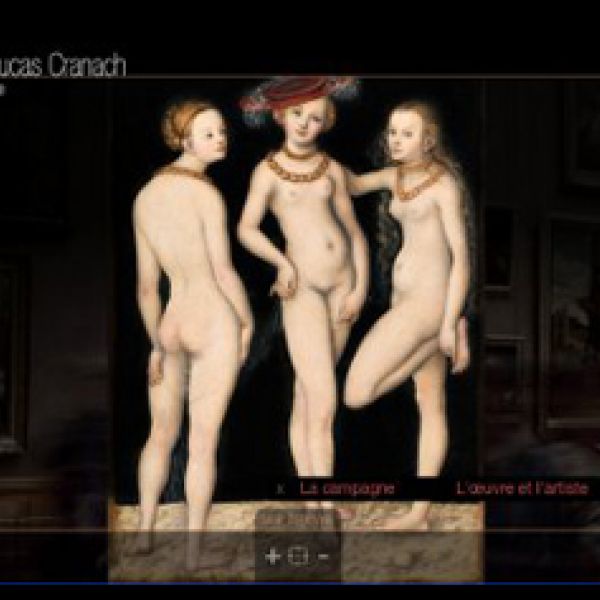
Les Trois Grâces de Lucas Chranach.
Le financement participatif (crowdfunding) est un outil marketing d’un nouveau genre. Ce mécanisme permet de récolter des fonds, généralement des petits montants, auprès d’un large public en vue de financer un projet créatif (musique, édition, film, etc.) ou entrepreneurial. En soumettant son idée sur une plateforme spécialisée, l’entrepreneur teste son projet: constitution d’une communauté de prescripteurs, tendances…
Le Louvre a créé une plateforme de financement participatif : « Tous mécènes. » Désireux de sensibiliser le grand public au don en ligne, le plus grand musée du monde s’est fixé comme objectif la levée d’un million d’euros en trois mois pour l’acquisition des « Trois Grâces » du peintre Lucas Chranach.
Lire la suite >>>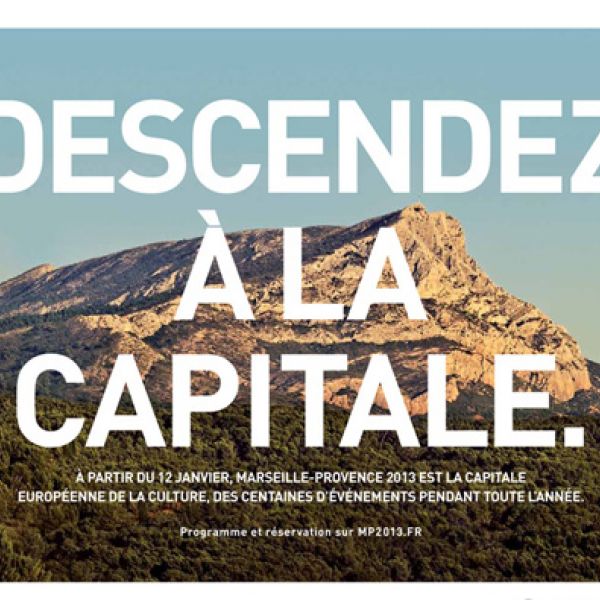
Campagne publicitaire de Marseille-Provence 2013 créée par l'agence Leg.
1,5 million d’euros. C’est le chèque que signe chaque année l’Union européenne à la ville élue « Capitale européenne de la culture ». Outre cette somme, les communes candidates recherchent surtout un titre prestigieux aux nombreuses retombées économiques. Ce précieux sésame est l’opportunité pour chaque ville, détentrice du label durant une année, d’élargir sa notoriété et de transformer, voire redorer son image.
A l’heure du clap de fin pour Marseille-Provence 2013, qui a accueilli plus de 8 millions de visiteurs et 400 événements, comment une ville peut-elle continuer à bénéficier de la médiatisation et de l’engouement du public, soit prolonger les effets bénéfiques du label ?
Lire la suite >>>
Afin de de prospérer, les musées ont plus que jamais besoin de responsabiliser leurs communautés.
Depuis janvier, le Dallas Museum of Art (DMA) propose une adhésion gratuite. C’est la première étape d’un plan visant à créer une relation à long terme avec ses visiteurs en offrant à ces derniers une expérience personnalisée et participative avec l’institution.
Plutôt qu'un modèle transactionnel classique basé sur l’échange entre argent et service, le DMA inaugure un modèle reposant sur les relations entre l’institution et ses visiteurs, intitulé « DMA Friends ». Le pari étant qu’un attachement accru du visiteur au musée générera au moins autant de revenu que le fait une adhésion standard.
Le musée a mis en place un programme de fidélisation qui récompense les membres pour leur présence et leurs interactions avec l’institution. Un cercle vertueux participatif qui permet de décupler l’implication ...
Lire la suite >>> Restitution des œuvres d’art : « Il est urgent de réinventer une nouvelle forme de gouvernance culturelle »
Par FRANÇOIS BLANC
Toutes ses contributions >>>
"Bien communiquer est un art à forte valeur ajoutée"
Par FRANÇOIS BLANC
Toutes ses contributions >>>


